June 2026 Highlight: From Prison to Paycheck – A St. Louis Dad’s Second Chance
By: Simon Law | June 9, 2026
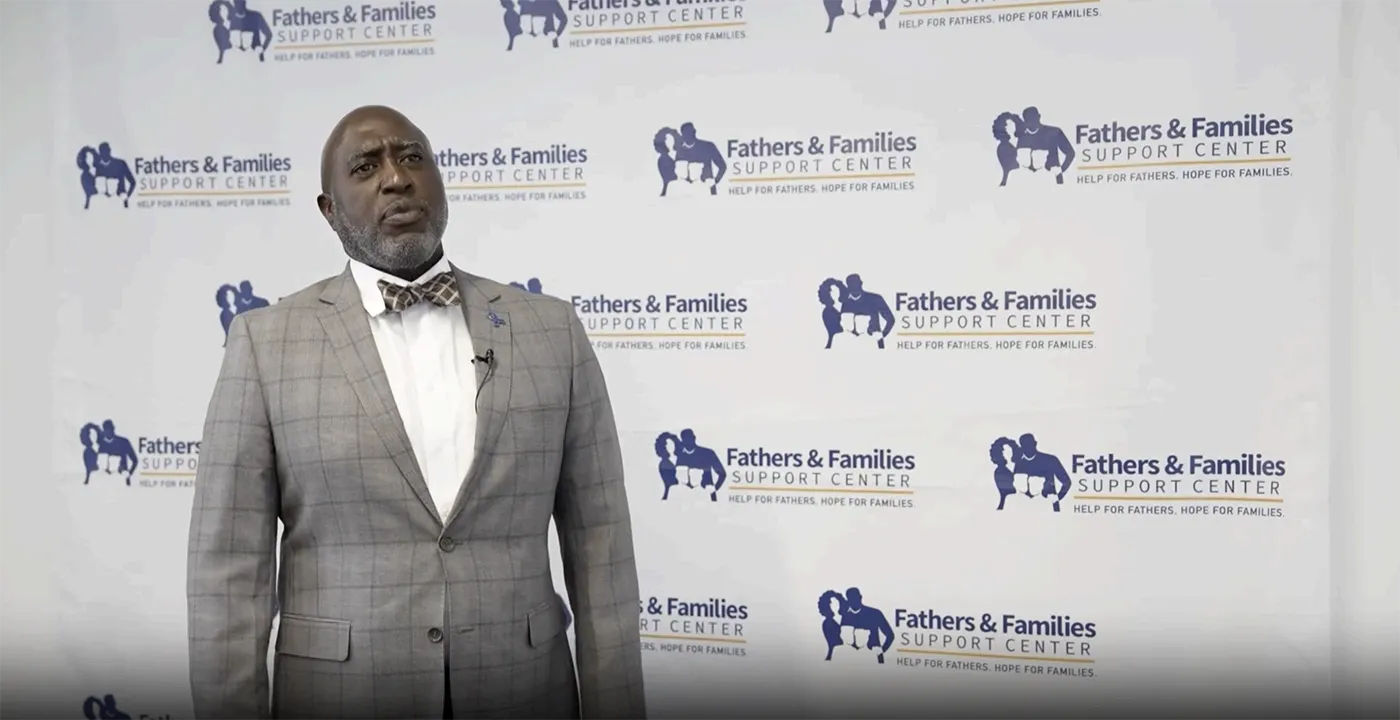
ST. LOUIS — Deveion Hurse always tried to get himself together on his own.
“I believed in God and just thought I could do it,” he said.
But by 35, he had been in and out of prison for most of his life. He didn’t have much of a relationship with his four children ages 10 to 21, let alone a job he could ever see turning into a meaningful career. He was behind on child support.
During his last stint in the federal penitentiary, a friend told him about Fathers and Families Support Center. It proved to be a conversation that changed the course of his life.
The nonprofit has been transforming the lives of fathers and families like Deveion’s in St. Louis since 1998. In all, it has served about 23,000 men just like Deveion and affected the lives of more than 57,000 children – mostly through a six-week class that meets every weekday from 8 a.m. to 5 p.m.
It’s the kind of place where if you’re on time, you’re late. The terms “baby momma” and “baby daddy” are not allowed. Even though marijuana is legal, no one can show up smelling like they just used it.
Deveion wasn’t a believer at first.
“I was like, I don’t have time for a six-week class exploring my feelings and stuff like that, I’ve got to find a job,” he recalled.
So, he tried to on his own. Just like he always did. But everything he found through online job searches turned up empty. He wasn’t getting callbacks. He didn’t have a resume. And he knew his record was holding him back. He could feel the temptation of making quick money on the streets nagging at him again.
Fathers and Families Support Center was the only option he had not yet explored. So, he called and enrolled.
That was two years ago. He now has a relationship with his four older children, as well as a 7-month-old daughter. He coaches his 10-year-old’s football team. And recently got a promotion at the property management company where he works. He started there as a janitor, and is now a make-ready tech, making sure apartments and properties are move-in ready.
He sees a future as an entrepreneur in property management himself one day. For now, he’s too busy soaking up all the knowledge he can about how companies work.
His boss says she has admired Deveion’s transparency from the first time they spoke for an interview. He told her about his past and admitted he had concerns that the offices were in a neighborhood where he had been in trouble before. He worried he would be tempted into bad decision-making again if he worked in the neighborhood, she said.
So far, he’s been successful.
Fathers and Family Support Center wasn’t the first nonprofit program Deveion said he has tried – but it’s the only one that has worked.
“They really teach you everything,” he said. “They even teach you about nutrition and meal prep. And the people they have working here, they’ve walked the walk. They can talk the talk. If you want a second chance in life, they take you through all the steps and give you all the tools, but it’s all on you if you are looking to change.”
One of those who talks the talk because he walked the walk is Reggie Slaughter.
He was headed on a similar path as Deveion in his younger years and struggled to have a co-parenting relationship with the mother of his 8-year-old daughter. At the time, the organization was running out of the Peabody projects. His daughter’s mother was then killed in a car accident, leaving him a single father.
“Now, that child is 32 years old and makes more money than me,” Slaughter said proudly.
He credits the organization’s founder, Halbert Sullivan, as the man who changed his life. Sullivan was addicted to crack and sleeping on a bus stop bench when he decided to change his life. He graduated from the master’s degree program at the Brown School of Social Work at Washington University with honors in less than one year.
He started working with youth for St. Louis Public Schools and quickly realized a child’s chances for success starts at home. He then formed Fathers and Families Support Center primarily focused on fathers, but the program now includes outreach to mothers.
“It’s important that we reach both parents,” Slaughter said.
The nonprofit also has an employment development and mentoring program, a Family Formation program as well as a youth program to target youth ages 14 to 24 involved in DFS and youth struggling in schools.
Fathers and Family Support Center also helps men and fathers like Devion through its Re-Entry Project at the Transition Center of St. Louis. Men who graduate FFSC’s Re-Entry Project go through a similar program like Devion with a focus on re-entering society from prison as responsible parents and citizens. Graduates of FFSC’s Re-Entry Project have a 7% recidivism rate, when the national average is about 35%, according to the organization’s website.
A timeline of the organization’s history adorns the main wall inside the offices, where family law attorneys, outreach workers, a licensed therapist and program coordinators are busy at work. At the center of the timeline is a portrait of Sullivan.
“When some of our young men come in here, they have this old-fashioned belief that, ‘I’m the man, I should be the head of the household,’” Slaughter said. “And Mr. Sullivan would always say, ‘How can you be the head of the household when you don’t have your head on straight?’”Slaughter channels Sullivan’s teachings and mentorship when he works with fathers like Deveion.
It was the nonprofit that put him in touch with the property management company where he now works. It was the nonprofit that helped him write a resume. And it was the nonprofit that fitted him for his first suit to wear to a job interview.
“These companies know when Fathers and Family Support Center calls, it’s straight from horse’s mouth,” Deveion said. “They are the real deal.”
Slaughter lit up when he saw Deveion in the office.
“He realized he could make good and not have to worry about retaliation or his past hunting him down,” Slaughter said. “Another thing we tell men like Deveion is: ‘You come here to tap in, so when you get out there, you don’t tap out.’”
And you won’t have to do it alone.
Request your free case consultation – contact us today
Related Articles
September 2026 Highlight: Anonymous Tips Help St. Louis CrimeStoppers Clear Cases
For people who want to help police but fear retaliation or simply don't want their identity known, St. Louis Regional...
August 2026 Highlight: Home Sweet Home Supports Vulnerable Families Transitioning to Stable Housing by Providing them Furniture, Empowering Choice, and More
Working for a women’s shelter, Betsy Reznicek was getting tired of watching helplessly as her clients worked hard to come...

July 2026 Highlight: Second Chances and Good Food how a Nonprofit Celebrates Chef Who Turned Prison Meals Into a Business
Deveion Hurse, after years of incarceration, transformed his life through St. Louis' Fathers and Families Support Center.