The Legal Implications of Tesla’s Flawed Autopilot System
By: Simon Law | January 6, 2026
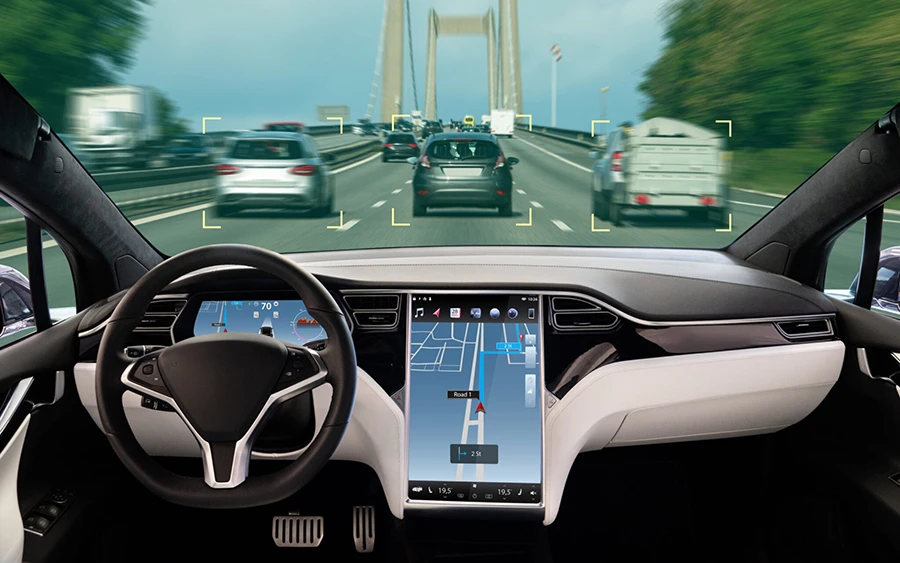
The evolution of technology is exciting and does so much to make our lives easier, including new capabilities designed to keep us safe on the road. One example that stands out as a pioneer in semi-autonomous driving is Tesla’s Autopilot system. However, as this cutting-edge technology advances, so do the legal implications surrounding it, particularly in cases where the Autopilot system fails. Unlike typical car accidents, the Tesla Autopilot legal implications raise questions about who can be held liable in a personal injury case involving semi-autonomous vehicles, such as in the case of a fatal Tesla crash in Florida in 2019.
Understanding your rights, both as a driver of a semi-autonomous vehicle and a typical vehicle, and seeking guidance from experienced car accident attorneys can be very helpful after an accident.
The Tesla Case: What to Know
In late November 2023, a Florida judge determined a 2019 lawsuit against Tesla and its Autopilot driving car could go to trial due to “reasonable evidence” that the company CEO, Elon Musk, and executives were aware of a defect yet continued selling it to customers.
The Background
In 2019, the driver of a Tesla Model 3, Jeremy Banner, switched on the Autopilot function and, roughly 10 seconds later, drove under a semi truck’s trailer, shearing off the top of the vehicle and killing him. According to a National Transportation Safety Board report, the Tesla was “traveling at a recorded speed of 69 mph” and “did not apply the brakes or take any other evasive action to avoid the truck, which was crossing in front of him at about 11 mph.” Even after the collision, the vehicle continued coasting into a median roughly 1,680 feet from the initial collision.
After the accident, Banner’s wife, Kim, filed a suit accusing Tesla of gross negligence and intentional misconduct. The Florida judge determined the accident was “eerily similar” to the company’s first autopilot-related death that occurred in 2016, in which another Model S hit a semi-truck, causing the top to be chopped off and killing the driver. At that time, Tesla pushed off blame, stating, “Neither Autopilot nor the driver noticed the white side of the tractor-trailer against a brightly lit sky, so the brake was not applied.” They also blamed it on “extremely rare circumstances,” including the trailer’s high ride height and its positioning across the road.
Despite evidence piling up that the autonomous system was flawed, Tesla continued to make strong public statements with a robust marketing strategy highlighting the vehicle’s autonomous capabilities. The decision to move forward with a trial came after an October case in which a California judge ruled that the driver-assistance software was not at fault in a crash that led to a driver’s death and the severe injury of two passengers.
This Palm Beach, Florida lawsuit is one of several involving Tesla’s Autopilot system, contributing to a wave of 2025 decisions after hundreds of system failures.
The Verdict: Judge Orders Tesla to Pay 240 Million Dollars to the Victims
In August 2025, a Miami jury awarded $243 million to the victims in a separate 2019 Autopilot-involved crash. Here’s how this award breaks down:
- $129 million in total compensatory damages, of which $43 million was assigned to Tesla
- $200 million in punitive damages
Under a pre-trial agreement, Tesla argues it will actually pay less, capped at roughly $172 million, due to a limit on punitive awards. In court, plaintiffs’ attorneys accused Tesla of misleading customers: they argued that Tesla overstated Autopilot’s capabilities and failed to sufficiently warn drivers about its limitations. Tesla stated it plans to appeal the verdict.
Legal analysts are calling the verdict a major signal. As Dan Ives from Wedbush Securities stated, “It’s a big number that will send shock waves to others in the industry.”
More Lawsuits Against Tesla’s Autopilot System Are Being Filed
The precedent set by the Miami verdict is already rippling through the courts. According to Reuters, plaintiffs’ attorneys in other Autopilot-related lawsuits are pushing to share Tesla’s internal engineering and design documents across cases.
These lawyers argue that many of the lawsuits involve similar technical issues, and that sharing discovery would increase efficiency and help build stronger claims.
Tesla, however, has pushed back. A judge denied a request for unfettered sharing of trade-secret materials, citing the sensitive nature of the designs.
That said, legal experts expect the number of Autopilot lawsuits to grow substantially now that there’s a high-profile verdict on the books. With a major jury award, other plaintiffs may feel emboldened to go to trial rather than settle.
How Many Accidents Have Occurred Due to Autopilot Failure?
As of August 2023, the National Highway Traffic Safety Administration (NHTSA) had investigated 956 reported crashes involving Tesla vehicles through August 30, 2023. Of these, 467 were judged relevant to Autopilot misuse by the Office of Defects Investigation (ODI).
Here’s a breakdown of these incidents:
- 211 crashes involved the front of a Tesla striking another vehicle or obstacle, in situations where an attentive driver could have seen and possibly responded to the hazard.
- 145 crashes were “roadway departures in low-traction conditions,” such as wet roads
- 111 crashes involved “roadway departures where Autosteer was inadvertently disengaged” by the driver
In 59 of these crashes, drivers had five or more seconds to react, with 19 of them seeing the hazard for at least 10 seconds. Despite this, drivers failed to brake or steer to avoid the accident in most cases. Notably, 13 fatal crashes (resulting in 14 deaths) were linked to misuse or system-design issues.
NHTSA identified a “critical safety gap”: drivers’ expectations of Autopilot often exceed its actual capabilities. Following the investigation, Tesla issued a recall (23V838) in December 2023 to improve driver monitoring, though NHTSA later opened a recall query (RQ24009) to evaluate whether the fix was sufficient.
Why This Matters Legally
- These trends support claims that Tesla’s system design and driver engagement controls may have contributed to accidents and fatalities.
- Regulators’ findings strengthen arguments of negligence or product defects.
- As more internal documents and crash data become available, attorneys may uncover systemic flaws rather than isolated misuse.
According to NHTSA data analyzed by Car and Driver, Tesla’s Autopilot has been involved in 736 crashes and 17 fatalities since 2019, with 11 of those deaths occurring after May 2022.
The increase in crashes has coincided with Tesla’s rapid rollout of its Full Self-Driving software, which expanded from roughly 12,000 to nearly 400,000 users over about a year.
Challenges in Personal Injury Cases Involving Autopilot Systems
Personal injury cases involving Autopilot require navigating complex technical and legal issues. Attorneys must gather evidence of technical failures, assess driver behavior, and consult expert witnesses. The increasing availability of Tesla’s internal documents and the outcomes of the 2025 verdicts make expert analysis more critical than ever.
According to Simon Law trial attorney Timothy M. Cronin, “In essence, the strength of the case will come down to the specifics of the crash, and the law of the state where it happened regarding product liability claims and comparative fault.”
Determining Who is Legally Responsible for the Accident
Autopilot-related cases are reshaping liability in car accidents. Traditionally, drivers are held responsible, but recent verdicts, such as the 2025 Miami case, suggest that manufacturers may face increased accountability if evidence shows negligence, false advertising, or material misrepresentations.
What to Do After an Autopilot-Related Accident
Initial steps after an Autopilot-related accident are similar to a typical car accident.
- Seek medical evaluation for any injuries
- Report the accident to law enforcement
- Document the accident, if you are able, with notes and photos
- Contact an experienced lawyer
If you are the driver of a Tesla and want to sue the manufacturer, you will need to prove they were liable. Below are the general steps to take to show product liability:
- Show evidence that Tesla was the commercial seller who sold the vehicle involved
- Show proof of injuries or damaged property
- Provide proof the vehicle was defective when it was sold
- Show evidence that the defect was the cause of the accident and subsequent injuries
Implications for Tesla Owners & Potential Plaintiffs
As current law allows other parties to sue the at-fault driver in an Autopilot-related accident, Tesla owners could be at higher risk of dealing with an intense legal battle. This decision could become much more difficult depending on the outcome of the case in Florida and other Autopilot-related cases.
Tesla drivers should always follow all safety precautions with the Autopilot feature, including keeping both hands on the steering wheel and being prepared to take over at any point. It is essential to be aware of an automation bias or an over-reliance on the vehicle’s automated aids and decision support systems because, as we’ve seen, these are not always reliable.
With the increase in cases against Tesla, there is potential for class action lawsuits to emerge against the company that owners could get involved in. These may encourage a positive resolution from Tesla, but those who have a larger, individual case will most likely want to file an independent lawsuit.
Importance of Obtaining Legal Representation in Autopilot-Related Cases
Whether you are a Tesla owner or have been in an accident involving an Autopilot system, obtaining experienced legal representation is crucial. These are complicated cases, and you should not have to navigate them alone. In addition, an experienced law firm will have access to expert witnesses that could prove critical to your case. A lawyer will also be able to gather all of the necessary information and evidence to present the best case possible.
Injured in an Autopilot-Related Accident? Call Simon Law.
The cases against Tesla are evidence of the justice system navigating new, uncharted territory. Seeking legal counsel from an experienced personal injury law firm, like Simon Law, will help you unravel the complexities, whether you’re the driver of a Tesla or someone who was a victim in an Autopilot-related accident.
Our attorneys are here to provide you with a free legal evaluation of your claim and have the ability to pursue cases nationwide from our St. Louis-based office. Contact the car accident attorneys at Simon Law today.
Request your free case consultation – contact us today
Related Articles
Distracted Driving: Texting & Driving Statistics In Missouri
Distracted driving, specifically texting while driving, has been a large part of political discourse for the last several years, picking...
Is It Worth Getting an Attorney for a Car Accident?
After a car accident, many people know to contact the insurance company and emergency services, but is it worth getting...
Uber Or Lyft Accidents: What To Do If You’re Involved
In recent years, ride-hailing services such as Uber and Lyft have become increasingly popular. They provide transportation to millions of...
