What to Do After an Uninsured Driver Accident in Missouri
By: Simon Law | June 9, 2026
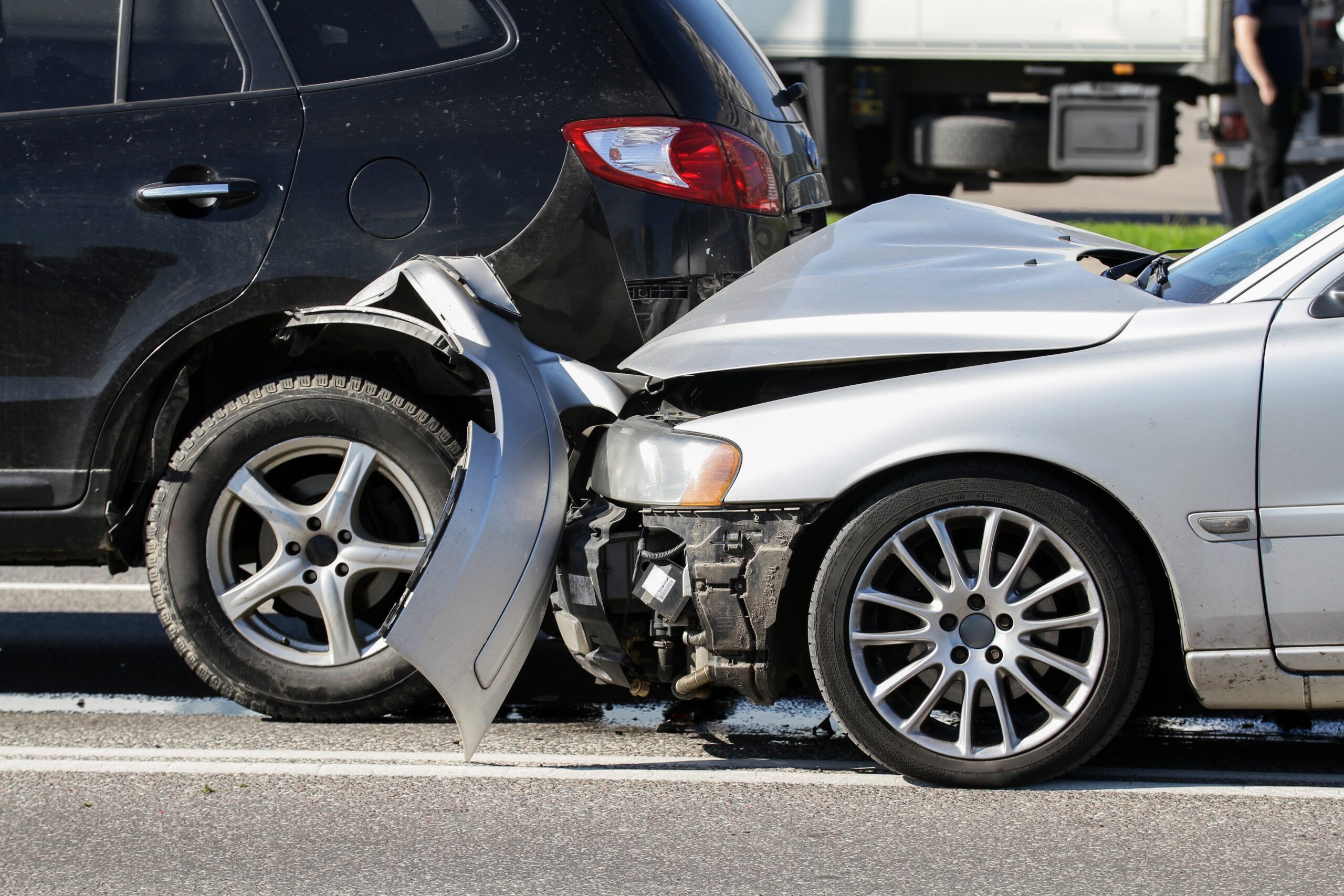
Getting hit by another driver is already one of the most stressful experiences you can go through. Finding out that the driver doesn’t have insurance can make it feel impossible. Approximately 13% of Missouri drivers operate vehicles without required insurance coverage, highlighting the prevalence of uninsured driving. The bills stack up, the injuries are real, and suddenly you’re left wondering whether you’ll ever see a dime in compensation.
But most car accident victims don’t realize that being hit by an uninsured driver doesn’t mean you’re out of options. Missouri law requires all drivers to carry insurance, specifically motor vehicle liability insurance, and car insurance policies must include uninsured motorist coverage. In fact, many of the largest settlements in cases like these don’t come from the uninsured driver at all but from third parties who share legal responsibility for the crash.
If you’ve been injured in an uninsured driver accident in Missouri, Simon Law can help you uncover every available path to compensation, including those that most people never think to pursue.
Why Uninsured Driver Accidents Aren’t Always “Dead Ends”
The first instinct after learning the at-fault driver has no insurance is to assume you’re stuck. That assumption is understandable, but wrong.
A thorough legal investigation into the circumstances of your crash often reveals that additional parties may share responsibility. The uninsured driver may be just one piece of a larger puzzle, and identifying the other pieces is where experienced legal counsel makes all the difference. Having your own insurance policy and maintaining adequate insurance coverage, such as uninsured motorist protection, is crucial in these situations. Providing accurate insurance information is essential for the claims process to proceed smoothly and to ensure your rights are protected.
When we investigate an uninsured driver accident in Missouri, we don’t just look at who was behind the wheel. We look at who employed them, who owned the vehicle, whether the road itself contributed to the crash, and whether any mechanical defects played a role. Each of those threads can lead to a liability claim, often against parties with substantially deeper pockets than the driver alone. As an insured driver, you have the right to pursue compensation through your own insurance policy and the claims process, even when the at-fault driver is uninsured.
The Myth of “No Insurance = No Compensation”
It’s a common and costly misconception to believe that if the at-fault driver doesn’t have insurance coverage, there’s nothing to recover. In reality, Missouri law and sound legal strategy create multiple recovery paths that are completely independent of the at-fault driver’s coverage status. Uninsured motorist insurance is required by Missouri law, and uninsured motorist coverage works by stepping in to protect you when the at-fault driver lacks insurance.
Two of the most important are your own uninsured motorist (UM) coverage, which you likely already carry, and third-party liability claims against other responsible parties. You can file an uninsured motorist claim with your insurer, and uninsured motorist coverage applies in situations where the at-fault driver is uninsured or in hit-and-run accidents. Understanding both and knowing when each applies is essential to maximizing your recovery after an uninsured driver accident in Missouri.
Understanding Uninsured Motorist Coverage
Missouri is one of the relatively few states that mandate uninsured motorist coverage on every auto insurance policy. The law requires all drivers to maintain minimum coverage limits for uninsured motorist insurance. This protection exists precisely because thousands of Missouri drivers remain on the road without insurance, and when they cause a crash, their victims need a safety net.
According to the Missouri Department of Revenue, all auto insurance policies in the state must include at least $25,000 per person and $50,000 per accident in uninsured motorist coverage for bodily injury. These coverage limits determine the maximum amount the insurance company pays for your losses. When an at-fault driver has no insurance, you can file a UM claim directly with your own insurer.
It is important to report the accident to your insurance company as soon as possible, ideally within 24 hours, to ensure that your claim can be processed efficiently.
What Uninsured Motorist Coverage Pays For
UM coverage is designed to put you in the same financial position you would be in if the at-fault driver had carried the required liability insurance. That means it can cover:
- Medical bills, medical expenses, and medical care, including emergency care, hospitalization, surgery, and ongoing treatment
- Lost wages if your injuries prevent you from working
- Pain and suffering damages
- Other injury-related expenses recognized under Missouri law
Uninsured motorist coverage primarily compensates for bodily injury losses and medical expenses, while property damage and vehicle damage are typically covered under collision coverage.
It is crucial to seek prompt medical attention and medical care after an accident, even if injuries seem minor, to ensure proper documentation for your claim.
Your UM coverage follows you, applying whether you’re in your own car, a passenger in someone else’s vehicle, or even as a pedestrian struck by an uninsured driver.
Why UM Coverage Alone May Not Be Enough
The problem with relying solely on UM coverage is built into the numbers. Missouri’s minimum UM limits reflect figures set long before today’s medical costs. A single emergency room visit, a few days of hospitalization, or any surgery can exhaust those limits almost immediately. For victims with serious injuries, the gap between what UM coverage pays and what they actually need can be enormous. Underinsured motorist coverage is an optional protection that can help bridge the gap when the at-fault driver’s insurance is insufficient to cover your damages.
This is precisely why third-party liability claims are so important. While your UM coverage represents a floor for your recovery, third-party claims against employers, vehicle owners, corporations, and others can dramatically raise the ceiling on your recovery. Your own uninsured motorist coverage and your own insurance company are the primary sources of compensation after an uninsured driver accident. You may also be able to recover economic damages through health insurance or workers’ compensation, which can help cover medical expenses and lost wages.
Under the No Pay, No Play law, uninsured drivers can still recover economic damages, such as medical bills and lost wages, but may be barred from pursuing compensation for non-economic damages unless exceptions apply.
The Real Opportunity: Third-Party Liability Claims
When the at-fault driver lacks insurance, the instinct is to focus entirely on that driver. However, it is crucial to identify the other driver and understand how the accident occurred, including what caused the injuries, as this information is essential for determining liability and coverage.
Third-party liability refers to legal responsibility held by someone other than the driver who caused the crash. Under Missouri law, multiple parties can share liability for the same accident, and when one of those parties is an employer, a corporation, or a government entity, the available insurance limits are often far greater than anything an individual driver could offer. Careful documentation, including taking photographs, gathering witness information, and obtaining a police report, is vital to support your insurance claims and to navigate the claims process effectively.
This is where a rigorous legal investigation pays off. Identifying third-party liability requires understanding the full context of a crash:
- Who the driver was working for
- Who owned the vehicle
- What road conditions existed
- Whether any equipment failures contributed
The answers to these questions can turn a seemingly limited recovery into a genuinely significant one.
What Is Third-Party Liability?
Third-party liability means that someone other than the at-fault driver contributed, through their own negligence or through their legal responsibility for the driver’s actions, to causing the accident and your injuries. Third-party liability can arise in any motor vehicle accident, regardless of whether the at-fault driver’s insurance is available or sufficient to cover your losses.
In practice, this can mean an employer who is legally responsible for the actions of an employee driving on company time, a vehicle owner who allowed an unsafe driver to borrow their car, a manufacturer whose defective parts contributed to the crash, or a government entity responsible for a hazardous road condition. In each case, the third party’s negligence or legal duty creates a separate, independent claim that doesn’t depend on whether the at-fault driver had insurance. However, recovering non-economic damages, such as pain and suffering, may be limited by Missouri’s No Pay, No Play law, though certain exceptions allow uninsured motor vehicle accident victims to pursue these damages.
In Missouri, you generally have five years to file a lawsuit for bodily injury after an accident happens.
The Role of Third-Party Liability Claims
Beyond providing an additional source of compensation, third-party claims often lead to substantially larger settlements than UM claims alone. The reason being commercial policies, corporate insurance programs, and government entities carry coverage that dwarfs what individual drivers are required to maintain. Car insurance coverage limits are much higher for these entities, and the insurance company is responsible for paying claims up to those limits. When you can connect your injury to a party with significant resources, the negotiating landscape changes entirely.
Successfully pursuing third-party claims requires legal experience in identifying them. They’re not always obvious, and insurance companies have every incentive to keep the focus on the uninsured driver and away from their own exposure. The claims process may involve a jury trial if a settlement cannot be reached, and Missouri’s No Pay, No Play law can affect the ability to recover compensation for non-economic damages. The attorneys at Simon Law know where to look.
Common Third-Party Liability Scenarios in Missouri
Employer Liability (Commercial Vehicles)
If the at-fault driver was performing work duties at the time of the crash, such as making deliveries, traveling between jobs, running errands for an employer, or driving a company vehicle, the employer may be legally responsible under the doctrine of vicarious liability. Under Missouri law, an employer can be held liable for the negligent actions of an employee acting within the scope of their job. This is especially significant in trucking and commercial vehicle accidents, where commercial insurance policies routinely carry limits in the hundreds of thousands or even millions of dollars, which far exceeds what any individual driver carries.
Even if the employer claims the driver was acting outside their normal duties, courts will closely examine whether the activity benefited the employer. An experienced attorney can often establish that the connection between the driver’s actions and their employment is closer than the employer would like to admit. If you were injured while working, workers’ compensation may provide additional benefits for medical expenses and lost wages.
Vehicle Owner Liability
When a driver borrows someone else’s car and causes an accident, the vehicle’s owner may be held liable under the theory of negligent entrustment. Under Missouri law, an owner can be held responsible for allowing an unsafe, inexperienced, unlicensed, or impaired driver to operate their vehicle. If the owner had reason to know the driver was unfit, such as a history of reckless driving, a suspended license, or known substance issues, and loaned the vehicle anyway, they may share responsibility for the resulting crash.
This matters because vehicle owners typically carry their own auto insurance, which may be available to compensate you even if the driver themselves has no coverage. If the at-fault driver’s insurance is unavailable or insufficient, the vehicle owner’s car insurance policy may provide coverage for your damages, depending on the terms of their car insurance policies and Missouri’s legal requirements for mandatory coverage.
Rideshare & Delivery Companies
Accidents involving Uber, Lyft, DoorDash, Amazon Flex, and other gig economy drivers present a unique third-party liability opportunity. These companies maintain substantial commercial insurance policies that may apply depending on the driver’s status at the time of the crash. A driver who is logged into the app and actively transporting a passenger or delivering may trigger corporate coverage that is significantly higher than the minimums for standard individual auto insurance.
Navigating rideshare and delivery company insurance structures requires detailed knowledge of how these policies are structured and how these companies often attempt to minimize their exposure. Simon Law has the experience to cut through that complexity. Filing insurance claims against rideshare or delivery companies can be a complex claims process requiring legal expertise.
Defective Vehicle or Parts
Not every crash is caused solely by driver behavior. Brake failures, tire blowouts, malfunctioning safety systems, and other mechanical defects can contribute to accidents, potentially giving rise to product liability claims against manufacturers, distributors, or repair facilities. If a defective part played a role in your crash, you may have a valid claim against the manufacturer, regardless of whether the driver was insured.
These cases require early investigation to preserve evidence, but they can produce significant recoveries through product liability law when defects are identified. Claims for vehicle damage and vehicle repairs may also be included in product liability cases, helping address the costs of repairing or replacing your vehicle after an accident.
Government or Roadway Liability
Missouri roads are maintained by a combination of state, county, and municipal agencies, and when poor road design, missing signage, inadequate lighting, or unaddressed hazardous conditions contribute to a crash, those government entities may be held partially liable. Pothole damage that causes a driver to lose control, faded lane markings on a confusing interchange, or a missing guardrail on a dangerous curve are all examples of roadway conditions that can give rise to government liability claims.
It’s important to note that claims against government entities in Missouri carry strict notice requirements and shorter deadlines than standard personal injury claims. If roadway conditions may have contributed to your accident, it’s critical to act quickly. Careful documentation of property damage and hazardous conditions, such as photographs, police reports, and detailed notes, can be essential to support your claim against a government entity.
Why Third-Party Claims Often Lead to Bigger Settlements
The practical advantage of third-party claims comes down to one factor: financial capacity. When you pursue a claim against an individual uninsured driver, you’re limited by whatever assets that person has, which may be very little. Third-party defendants operate under a fundamentally different calculus.
Commercial businesses and their insurers carry significantly higher policy limits because they’re required to. Corporations facing reputational and legal risk in litigation have incentives to resolve claims. Government entities, while subject to damage caps, carry their own liability coverage. In each case, the available compensation is likely to be substantially greater than what an uninsured driver alone could ever offer. Third-party claims allow you to pursue compensation and recover compensation for your losses beyond what is available from the uninsured driver.
Third-party claims require solid investigation, evidence, and skilled legal advocacy. But when the facts support them, they can transform the value of an otherwise limited case.
Don’t Settle for Less — Contact Simon Law to Maximize Your Compensation
An uninsured driver accident in Missouri doesn’t have to end in financial hardship. If you’ve been seriously injured, the compensation you’re entitled to may be far greater than what your UM coverage alone can provide, and identifying the full scope of your recovery requires experienced legal investigation. Simon Law focuses on uncovering every viable source of liability, with particular attention to the high-value third-party claims that can make a genuine difference in your outcome.
Our personal injury attorneys have the resources, legal expertise, and tenacity to pursue every avenue to secure compensation on your behalf. Contact a Missouri car accident attorney today for a free consultation. We’ll review your case, explain your options, and help you understand what your claim may truly be worth. We offer a free case evaluation and a no-obligation consultation to thoroughly assess all potential sources of compensation after an uninsured driver accident, ensuring no opportunity for recovery is overlooked.
Common Questions About Uninsured Driver Accidents
Can I recover more than my uninsured motorist limits?
Yes, in many cases you can. Your UM policy sets a floor for your recovery, not a ceiling. If third parties share legal responsibility for your crash, their insurance is entirely separate from your UM coverage and can be pursued in addition to it. However, your own uninsured motorist coverage has specific coverage limits, and understanding these limits is crucial for maximizing your recovery. Successfully identifying and pursuing employer liability, vehicle owner negligence, or other third-party claims is often how seriously injured victims recover amounts that genuinely reflect the full cost of their injuries.
What is third-party liability in a car accident?
Third-party liability refers to the legal responsibility of a party other than the at-fault driver for contributing to your accident or injuries. In an uninsured driver case, a third party might be the driver’s employer, the vehicle’s owner, a rideshare company, a parts manufacturer, or a government entity responsible for road conditions. Each of these parties may have its own insurance and financial resources, making third-party claims an important avenue for maximizing your compensation. Motor vehicle liability insurance and car insurance are key sources of compensation in third-party liability cases.
Is it worth suing an uninsured driver in Missouri?
It depends on the driver’s assets. A civil judgment against an uninsured driver is legally valid, but collecting on that judgment is a separate challenge, which can be difficult if the driver has limited assets or income. Missouri provides additional mechanisms, including the Tort Victims’ Compensation Fund, which can assist victims who have exhausted other avenues. In most cases, however, the more valuable strategy is to focus legal resources on identifying viable third-party liability claims rather than solely pursuing the uninsured driver. The insurance claims process can be complex, and navigating insurance claims, especially after an uninsured driver accident, often requires legal assistance to ensure fair compensation.
How do I know if a third party is liable?
Determining third-party liability requires a thorough investigation of the facts surrounding your crash. Key questions include:
- Was the driver working at the time?
- Who owned the vehicle?
- Were there any mechanical issues?
- Did road conditions contribute?
These are not questions you can always answer alone. An experienced Missouri personal attorney can conduct the investigation, gather evidence, and evaluate the legal theories that may support a third-party claim in your specific situation. Careful documentation, including photographs, medical records, and especially obtaining a police report, is crucial to support your claim, challenge insurance denials, and maximize compensation. Remember, failing to report an accident involving an uninsured motorist can lead to the suspension of driving privileges in Missouri.
Request your free case consultation – contact us today
Related Articles
How Simon Law is Holding Amazon Accountable for Delivery Drivers
As online shopping surges, so do crashes with Amazon drivers who are racing to meet tight deadlines. But when something...
The Legal Implications of Tesla’s Flawed Autopilot System
The evolution of technology is exciting and does so much to make our lives easier, including new capabilities designed to...
Distracted Driving: Texting & Driving Statistics In Missouri
Distracted driving, specifically texting while driving, has been a large part of political discourse for the last several years, picking...
