What Victims Should Know About Trucking Company Rapid Response Teams
By: Christine Byers | August 14, 2026
Quick Answer
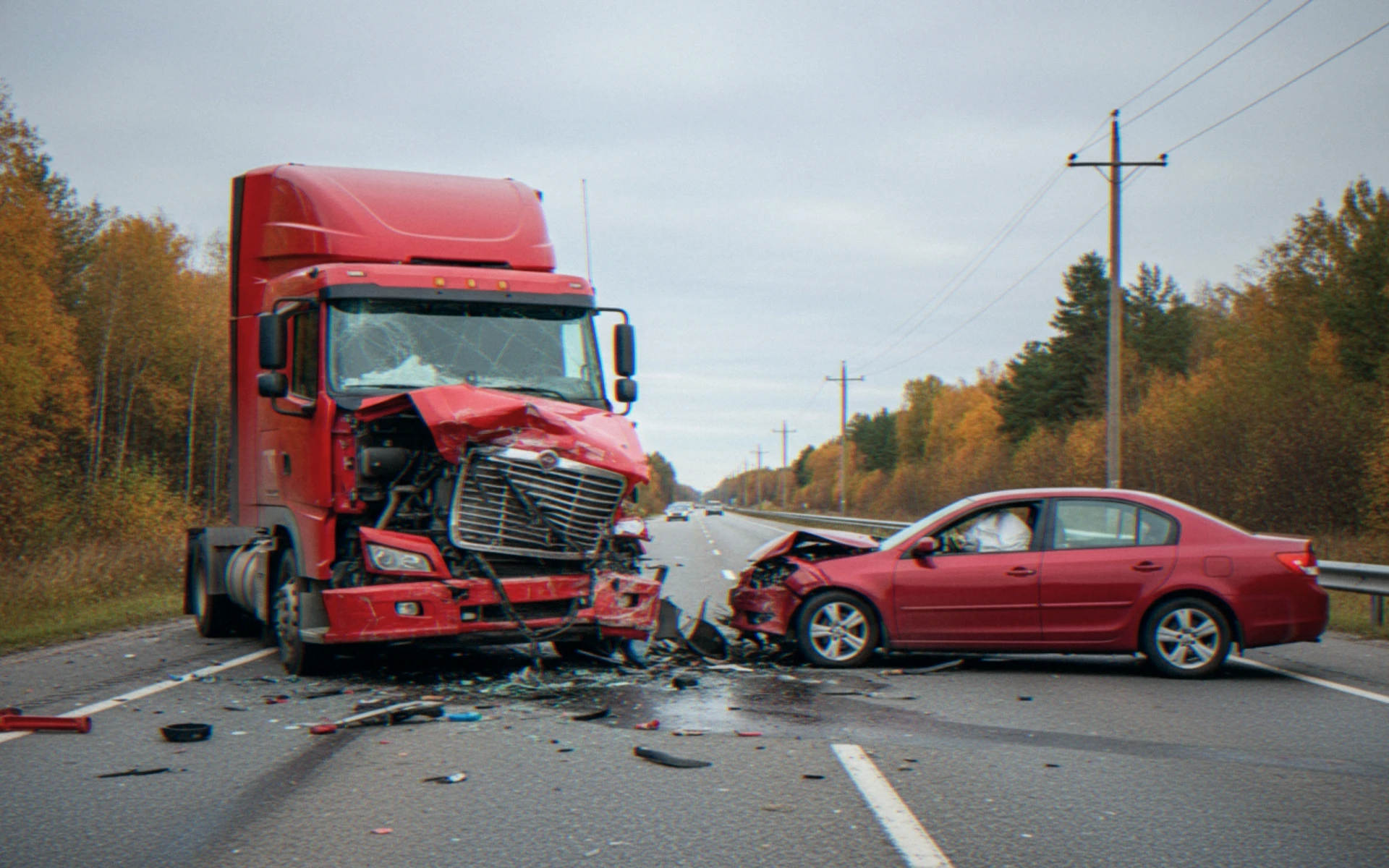
After a serious truck accident, a trucking company or its insurance carrier may send a rapid response team to investigate the crash. Depending on the circumstances, the team may include investigators, adjusters, accident reconstruction experts, and defense attorneys.
Their job is to gather information, preserve evidence, and evaluate potential legal exposure on behalf of the trucking company. If you were injured in a Missouri truck accident, understanding how these teams operate can help you make informed decisions while your own claim is still developing.
Key Takeaways
- Some trucking companies and insurers dispatch rapid response teams soon after serious crashes.
- These teams work on behalf of the trucking company, not injured victims.
- Important evidence may include electronic logging device records, engine control module data, maintenance records, driver qualification files, and witness statements.
- Federal regulations require motor carriers to maintain many safety records, although retention periods vary depending on the type of record.
- Missouri law recognizes that intentional destruction or concealment of evidence may support an adverse inference in litigation under appropriate circumstances.
A Serious Truck Accident Investigation Often Begins Within Hours
Many people assume that everyone involved in a truck accident begins investigating the crash at the same time. In reality, commercial trucking companies often have far more resources available immediately after a serious collision than the average injured person.
Commercial truck crashes are not uncommon in Missouri.
According to the Federal Motor Carrier Safety Administration, 5,024 crashes involving large trucks occurred in Missouri in 2022, resulting in 146 fatalities and 2,179 injuries. The frequency and severity of these crashes help explain why trucking companies often have established procedures for investigating serious collisions as quickly as possible.
Following a crash involving a tractor-trailer on I-70, the trucking company may notify its insurance carrier, safety department, outside investigators, or legal counsel. Depending on the severity of the collision, a rapid response team may travel directly to the scene while emergency responders are still conducting their investigation.
That does not happen after every crash. Smaller carriers may rely primarily on their insurance company, while larger motor carriers often have established procedures for responding to significant accidents. The response depends on factors such as the seriousness of the injuries, the amount of property damage, whether a fatality occurred, and the company’s internal policies.
Understanding why these teams exist can help accident victims better understand the investigation that follows.
What Is a Trucking Company Rapid Response Team?
A rapid response team is a group of professionals assembled to investigate a commercial truck accident on behalf of the trucking company or its insurer.
Depending on the circumstances, the team may include:
- Insurance adjusters
- Accident reconstruction specialists
- Safety directors
- Independent investigators
- Defense attorneys
- Engineers or forensic experts
Each member has a different role, but they generally share the same objective. They gather information about the crash as quickly as possible while the evidence is still fresh.
This investigation may include reviewing the crash scene, photographing vehicle damage, documenting roadway conditions, locating witnesses, reviewing electronic records, and coordinating with law enforcement.
None of this is improper. In fact, investigating a serious commercial vehicle collision is often necessary because truck accident cases involve complex issues that do not arise in an ordinary passenger vehicle crash.
Why Do Trucking Companies Respond So Quickly?
Time matters after any accident, but it can matter even more in commercial trucking cases.
Physical evidence can disappear as vehicles are moved, skid marks fade, weather changes road conditions, and witnesses become harder to locate. Electronic information may also be overwritten or become more difficult to retrieve if it is not identified and preserved early.
Commercial trucks also generate significantly more operational data than most passenger vehicles. Depending on the equipment involved, investigators may seek information such as:
- Engine control module (ECM) or event data recorder information
- Electronic logging device (ELD) records
- GPS location history
- Driver inspection reports
- Dispatch communications
- Vehicle maintenance records
- Driver qualification records
Many of these records are governed by Federal Motor Carrier Safety Administration regulations, including requirements addressing driver qualifications, hours of service, inspection and maintenance, and record retention.
Because different records have different retention requirements, identifying potentially relevant evidence early in the process can be important. Some records are retained for years, while others may have much shorter regulatory retention periods.
What Evidence Is a Rapid Response Team Looking For?
Every truck accident investigation is different, but investigators often begin collecting evidence immediately after arriving at the scene.
Physical Evidence
The condition of the vehicles may help investigators understand how the collision occurred. They may document:
- Impact points
- Tire damage
- Underride damage
- Cargo securement
- Lighting systems
- Brake components
- Steering components
- Road debris
Photographs, measurements, drone imagery, and three-dimensional mapping technology may also be used in more serious collisions.
Electronic Evidence
Modern commercial trucks contain numerous electronic systems that can provide valuable information during an investigation.
Depending on the truck and the available technology, investigators may review data relating to:
- Vehicle speed
- Brake application
- Engine performance
- Steering inputs
- Hours of service
- Vehicle movement
- GPS tracking
- Driver activity
Not every truck captures the same information, and electronic data alone does not determine who was at fault. Instead, investigators typically compare electronic records with physical evidence, witness statements, police reports, and other available information.
Documentary Evidence
Commercial motor carriers are also required to maintain various business and safety records under federal law.
Depending on the issues involved in a case, these records may include:
- Driver qualification files
- Maintenance and inspection records
- Repair histories
- Drug and alcohol testing documentation when required by federal regulations
- Dispatch records
- Employment records related to the driver’s qualifications
Together, these materials can help create a more complete picture of the events leading up to a collision.
Can a Rapid Response Team Contact You?
In some cases, yes.
After a truck accident, you may be contacted by an insurance adjuster representing the trucking company or its insurer. Depending on the circumstances, an investigator or another representative may also reach out to gather information about the collision.
It is important to remember who these individuals represent. Their role is to investigate the accident on behalf of the trucking company or insurance carrier. They are not responsible for protecting your legal interests or advising you about your rights.
If you are contacted after a truck accident, you generally have the right to decide whether to provide a recorded statement or answer detailed questions before speaking with an attorney. In many situations, it may be helpful to understand the purpose of the request and whether additional information should first be reviewed.
Why Early Evidence Can Make a Difference
Unlike many passenger vehicle accidents, truck accident cases often involve evidence that is controlled by the trucking company.
For example, a motor carrier may possess records relating to:
- Driver qualifications
- Vehicle inspections
- Maintenance history
- Dispatch communications
- Hours of service
- Electronic logging device data
- Internal safety policies
- Driver training records
Some of these records are required under federal regulations, while others are maintained as part of the company’s normal business operations.
Certain categories of records also have minimum retention periods established by the Federal Motor Carrier Safety Administration. For example, records supporting a driver’s record of duty status generally must be retained for at least six months, while driver qualification files and maintenance records are subject to different retention requirements (See 49 C.F.R. §§ 379.3, 391.51, 395.8(k), and 396.3). These regulations establish minimum retention periods, but they do not necessarily require companies to preserve evidence indefinitely.
Because some records may eventually be discarded in the ordinary course of business once the applicable retention period expires, acting promptly after a serious truck accident can be important.
Preserving Evidence After a Missouri Truck Accident
One of the first steps taken in many truck accident cases is sending a preservation letter, sometimes called a spoliation letter.
A preservation letter notifies the trucking company that certain evidence may be relevant to anticipated litigation and requests that it be preserved rather than destroyed through routine business practices.
Depending on the facts of the case, the request may identify evidence such as:
- Engine control module (ECM) or event data recorder information
- Electronic logging device records
- Dash camera footage
- Inward-facing camera recordings
- GPS data
- Driver qualification files
- Maintenance and repair records
- Driver inspection reports
- Bills of lading and shipping documents
- Dispatch communications
- Cell phone records, where legally appropriate
- Post-accident drug and alcohol testing records required under federal regulations
- The tractor and trailer themselves for inspection
Every case is different. The specific evidence that should be preserved depends on how the collision occurred and the issues likely to arise during litigation.
What Happens If Evidence Is Lost or Destroyed?
Missouri courts recognize that evidence should be preserved once litigation becomes reasonably foreseeable.
If relevant evidence is intentionally destroyed or concealed, Missouri law allows courts, under appropriate circumstances, to permit juries to draw an adverse inference against the party responsible for destroying the evidence. In other words, the jury may be allowed to infer that the missing evidence would have been unfavorable to that party.
Missouri does not recognize an independent civil lawsuit for intentional spoliation of evidence. Instead, courts generally address the issue through evidentiary rules and other procedural remedies during the underlying case. (DeGraffenreid v. R.L. Hannah Trucking Co., 80 S.W.3d 866, 873-74 Mo. Ct. App. W.D. 2002).
That does not mean every missing document results in sanctions or an adverse inference. Courts examine the specific facts, including whether there was a duty to preserve the evidence, how it was lost, and whether the opposing party suffered prejudice.
Federal Regulations Also Require Certain Records
Commercial trucking companies operate under an extensive regulatory framework established by the Federal Motor Carrier Safety Administration.
Depending on the type of record involved, federal regulations require motor carriers to create and maintain documentation relating to areas such as:
- Driver qualification files. 49 C.F.R. Part 391.
- Hours of service and electronic logging devices. 49 C.F.R. Part 395.
- Inspection, repair, and maintenance records. 49 C.F.R. Part 396.
- Controlled substance and alcohol testing programs. 49 C.F.R. Part 382.
- Record retention requirements. 49 C.F.R. Part 379.
These regulations establish minimum safety standards for interstate motor carriers. They can also become important pieces of evidence in truck accident litigation when questions arise regarding driver fatigue, vehicle maintenance, regulatory compliance, or company safety practices.
Whether a particular regulation applies depends on the facts of the case, including the type of carrier involved and whether the operation is subject to the Federal Motor Carrier Safety Regulations.
Practical Steps After a Truck Accident
The hours and days following a truck accident can be overwhelming. Medical treatment should always remain the first priority, but there are also practical steps that may help preserve information while events are still fresh.
If your condition allows, consider:
- Seeking prompt medical evaluation and following your healthcare provider’s recommendations.
- Keeping copies of medical records, bills, and discharge instructions.
- Saving photographs of your injuries, vehicle damage, and the accident scene if available.
- Avoiding repairs or disposal of your vehicle until appropriate documentation has been completed.
- Keeping receipts for accident-related expenses.
- Writing down what you remember about the collision while those details are still fresh.
- Preserving correspondence from insurance companies or trucking representatives.
Not every recommendation applies in every situation, and every accident presents its own circumstances. The appropriate course of action depends on the facts of the individual case.
Why Truck Accident Cases Often Differ From Car Accident Claims
A collision involving a commercial tractor-trailer is often more complex than an ordinary passenger vehicle accident.
There may be multiple businesses involved, including:
- The trucking company
- The driver
- The trailer owner
- A maintenance contractor
- A cargo loading company
- A freight broker or logistics company
- Equipment manufacturers, in some circumstances
The investigation may also involve federal safety regulations, electronic data, maintenance histories, company policies, expert testimony, and accident reconstruction evidence.
As a result, truck accident litigation frequently requires reviewing a broader range of evidence than is typically available in a standard automobile collision.
The Bottom Line
Truck accident investigations often begin long before an injured person has had time to fully understand what happened.
Depending on the circumstances, a trucking company or its insurer may begin collecting evidence within hours of a serious collision. That investigation may include reviewing electronic data, documenting the crash scene, interviewing witnesses, and gathering company records that could later become relevant in litigation.
For injured victims, understanding that this process may already be underway can help explain why early evidence preservation is often discussed in commercial trucking cases. Every accident is different, and the evidence that matters in one case may not be significant in another. A thorough investigation generally requires looking at the complete picture rather than relying on any single piece of evidence.
If you were injured in a truck accident in Missouri and have questions about your legal options, speaking with an attorney can help you better understand the facts of your case, the evidence that may be available, and the laws that may apply.
Contact Simon Law After a Serious Truck Accident
The hours and days following a serious truck accident can be critical. While you focus on your recovery, the trucking company and its insurance carrier may already be investigating the crash, gathering evidence, and evaluating potential claims. Understanding what evidence may exist and how it can be preserved can play an important role in a truck accident case.
Simon Law represents individuals and families injured in commercial truck accidents throughout Missouri. The firm’s attorneys understand the unique issues these cases can present, including electronic records, federal trucking regulations, and evidence that may need to be preserved early in the investigation.
If you or a loved one has been injured in a truck accident, contact Simon Law to discuss your situation and learn more about your legal rights and options under Missouri law.
Frequently Asked Questions (FAQs)
Do all trucking companies have rapid response teams?
No. Whether a rapid response team is deployed depends on the trucking company, its insurance carrier, and the circumstances of the crash. Larger motor carriers often have established response protocols, while smaller companies may rely on their insurer or outside investigators to conduct the investigation.
Is a rapid response team the same as the police?
No.
Law enforcement officers investigate crashes to determine what happened and whether any traffic laws or criminal laws may have been violated. A trucking company’s rapid response team conducts its own investigation on behalf of the company or its insurer. These are separate investigations with different purposes.
Can a trucking company access the truck’s electronic data after a crash?
In many cases, yes.
Commercial trucks may contain electronic systems that record operational information such as vehicle speed, braking activity, engine performance, and hours of service data. The availability of this information depends on the truck’s equipment and the circumstances of the collision. The data itself does not determine fault, but it can become one piece of a larger investigation.
What is a preservation letter?
A preservation letter is a written request asking a party to preserve evidence that may be relevant to anticipated litigation.
In a truck accident case, a preservation letter may identify records such as electronic logging device data, maintenance records, driver qualification files, dash camera footage, dispatch communications, and other materials that could help explain how the crash occurred.
Can evidence disappear if no one asks that it be preserved?
It can.
Federal regulations establish minimum retention periods for many trucking records, but those periods vary depending on the type of record. Some electronic data may also be overwritten or lost through normal business operations if it is not identified and preserved. Every situation is different, and the availability of evidence depends on the facts of the case.
How long do I have to file a truck accident lawsuit in Missouri?
In many cases, Missouri law provides a five-year statute of limitations for personal injury actions. See Mo. Rev. Stat. § 516.120. Wrongful death claims are generally subject to a three-year limitations period under Mo. Rev. Stat. § 537.100.
The applicable deadline depends on the specific facts of the case, and exceptions may apply. Missing a filing deadline can affect your ability to pursue a claim, so it is important to understand which limitation period governs your situation.
Quick FAQs
| Question | Short Answer |
|---|---|
| What is a trucking company rapid response team? | A group of investigators, adjusters, attorneys, and other professionals who may investigate a serious commercial truck accident on behalf of the trucking company or its insurer. |
| Why are they sent to the scene? | To document the accident, gather evidence, and evaluate the company’s potential legal exposure. |
| Do they represent injured victims? | No. They represent the interests of the trucking company or its insurance carrier. |
| What evidence is commonly reviewed? | Electronic logging device records, engine control module data, maintenance records, driver qualification files, dispatch records, witness statements, photographs, and physical evidence from the scene. |
| Does every truck accident involve a rapid response team? | No. The response depends on the trucking company, its insurer, and the circumstances of the collision. |
| Does Missouri recognize a separate lawsuit for spoliation of evidence? | Generally no. Missouri courts typically address intentional destruction of evidence through evidentiary remedies within the underlying case rather than recognizing an independent tort. DeGraffenreid v. R.L. Hannah Trucking Co., 80 S.W.3d 866 (Mo. Ct. App. W.D. 2002). |
Request your free case consultation – contact us today
Related Articles

Supreme Court Clarifies Broker Liability: Trucking Victims Still Face an Uphill Climb
The Supreme Court’s ruling on the Federal Aviation Administration Authorization Act (FAAAA) represents great progress towards accountability for trucking companies,...
The Role of Black Box Data in Trucking Accident Investigations
When a passenger car collides with another passenger car, investigators typically rely on police reports, witness statements, and physical evidence...

Simon Law explains what trucking companies know before crashes happen
Accidents involving trucks as opposed to cars differ from a legal perspective, and one of the main reasons why is...