Kratom & 7-OH Lawsuits
Helping Victims & Families Pursue Justice After Serious Injury or Death Linked to Dangerous Kratom and 7-OH Products.
Contact Simon Law for a free case evaluation.
Kratom & 7-OH Injury and Wrongful Death Attorneys at Simon Law
At Simon Law, we understand how quickly a product marketed as a “natural” supplement can turn into a serious, life-altering health crisis. Our team has experience handling complex product liability litigation involving inadequately tested or improperly marketed products, including the growing wave of cases tied to concentrated 7-hydroxymitragynine (7-OH) products sold alongside traditional kratom. We offer skilled, compassionate representation to victims and their families as they navigate the medical, financial, and legal fallout of a serious kratom- or 7-OH-related injury.
Our approach combines thorough investigation, expert consultation, and relentless advocacy to pursue fair compensation for medical expenses, lost wages, dependency-related harm, and wrongful death. With a commitment to justice and personalized support, Simon Law stands by clients at every stage of the legal process.
About Kratom & 7-OH in Product Liability Cases
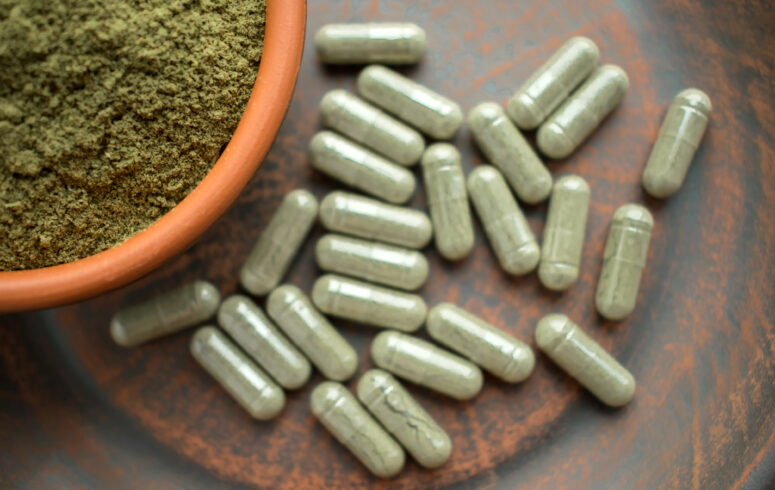
Kratom is a plant native to Southeast Asia whose leaves have long been chewed, brewed into tea, or ground into powder. In recent years, a separate and far more concentrated category of products built around a compound called 7-hydroxymitragynine, or 7-OH, has entered gas stations, smoke shops, and online marketplaces, often marketed as a natural, legal alternative to prescription opioids. Distinguishing between these two categories of product is central to understanding whether a person may have a legal claim.
What Are Kratom and 7-OH?
Kratom leaf naturally contains a compound called mitragynine, along with much smaller amounts of a related compound, 7-hydroxymitragynine (7-OH). Both compounds can interact with opioid receptors in the brain, though in traditional leaf products 7-OH is typically present only in trace amounts. Concentrated 7-OH products isolate and boost 7-OH to levels far beyond what occurs naturally in the plant, and are sold as tablets, gummies, drink shots, and capsules marketed for pain relief, mood enhancement, or energy.
How Concentrated 7-OH Differs From Traditional Kratom
This distinction matters both medically and legally. On July 1, 2026, the U.S. Drug Enforcement Administration announced its intent to temporarily place 7-hydroxymitragynine above a specified threshold, along with several related synthetic derivatives, into Schedule I of the Controlled Substances Act, following a formal recommendation from the FDA and warning letters the FDA issued in 2025 to companies selling 7-OH tablets, gummies, drink mixes, and liquid shots. Regulators have been explicit that this action targets concentrated, enhanced, and synthetic 7-OH products, not natural kratom leaf sold at trace levels of 7-OH.
- Traditional kratom leaf or powder: Naturally occurring, trace-level 7-OH content
- Concentrated 7-OH tablets, gummies, shots, and capsules: Chemically enhanced or synthesized to deliver much higher, opioid-like doses of 7-OH
- Many consumers are never told which category or product they are buying, or how the two differ in potency and risk
Reported Injuries and Safety Concerns
Public health agencies have raised increasing concern about concentrated 7-OH products. The Texas Department of State Health Services issued a health alert after its poison center network recorded a sharp rise in kratom- and 7-OH-related exposure reports, warning that 7-OH can cause serious health problems and carries a potential for dependence and abuse. Federal officials have similarly pointed to reports of misuse, dependence, and overdose associated with these products.
A 2026 CDC analysis of National Poison Data System records found that kratom-related exposure reports to U.S. poison centers rose approximately 1,200% between 2015 and 2025, from 258 reports to a record 3,434. The same analysis found that roughly 79% of kratom-associated deaths during that period (184 of 233) involved kratom used together with other substances, such as opioids, benzodiazepines, stimulants, or alcohol, underscoring how combination use can heighten the risk of a fatal outcome.
Serious harm reported in connection with kratom or 7-OH products includes:
- Overdose or opioid-like toxicity
- Severe sedation or respiratory depression
- Dependence, tolerance, and withdrawal symptoms
- Seizures or other neurological effects
- Liver injury
- Hospitalization following use of a concentrated 7-OH product
- Death, in some cases involving 7-OH alone or in combination with other substances
Not every kratom product carries the same risk profile, and not everyone who uses kratom or 7-OH will be harmed. But when a manufacturer sells a concentrated, opioid-like product without adequately warning consumers of its potency and risks, the people harmed by that product may have legal recourse.
Companies That May Be Investigated
Kratom and 7-OH litigation can involve multiple companies across the supply chain, including:
- Manufacturers that formulate or synthesize concentrated 7-OH extracts
- Companies that market kratom or 7-OH products under a specific brand name
- Distributors that supply these products to retail stores
- Gas stations, smoke shops, and convenience stores that sell concentrated 7-OH products, including to underage customers
- Online retailers that ship kratom or 7-OH products directly to consumers
Wrongful Death Claims Involving Kratom or 7-OH Products
Families who lose a loved one after kratom or 7-OH use may be able to pursue a wrongful death claim against the companies responsible for manufacturing, marketing, or selling the product. In Missouri, a wrongful death claim may generally be filed by a spouse, child, sibling, or the parent of the deceased, and must be filed within the state’s statute of limitations. These cases require careful investigation into the product involved, toxicology findings, and the circumstances surrounding the death.
This is not a theoretical risk. Courts have already held kratom companies accountable in wrongful death cases. In 2023, a Washington jury awarded $2.5 million to the family of Patrick Coyne against Society Botanicals and its owner, finding the company liable for negligence and a defectively designed kratom product after Coyne died from the toxic effects of its Kratom Divine product. That same year, a federal judge in the Southern District of Florida entered an $11 million default judgment against Grow, LLC and its owner, doing business as The Kratom Distro, in the death of Krystal Talavera, a 39-year-old mother of four who died after using the company’s “Space Dust” kratom product.
These outcomes reflect a growing body of case law establishing that kratom and 7-OH companies can be held liable when their products cause serious harm or death.
Past results in other firms’ cases do not guarantee or predict a similar outcome in any future case.
How Simon Law Can Help After a Kratom or 7-OH Injury
Kratom and 7-OH cases are still an emerging area of drug injury litigation. The science is developing, the regulatory picture is shifting, and the companies involved often span several links in a supply chain. Simon Law brings the investigative resources and litigation experience these cases demand.
Investigating Your Case
A strong kratom or 7-OH claim begins with a thorough investigation. Our team works quickly to gather and preserve the evidence needed to build your case, including:
- The product itself, including any unused portion, packaging, and labeling
- Receipts or records showing where and when the product was purchased
- Photos of the product, packaging, and any point-of-sale marketing or signage
- Medical records, toxicology reports, and hospital discharge paperwork
- Any communications with the retailer, distributor, or manufacturer
Because kratom and 7-OH products are frequently sold without the recordkeeping systems required for prescription drugs, this kind of documentation is often critical to proving what was purchased, from whom, and what it contained.
Proving Liability in a Kratom or 7-OH Case
To recover compensation in a personal injury claim, it must be demonstrated that a manufacturer, distributor, or retailer’s conduct directly caused or contributed to your injury or loss. Simon Law builds liability arguments through:
- Documenting whether the product failed to disclose that it contained concentrated or enhanced levels of 7-OH
- Evaluating whether the product was marketed as “natural,” “safe,” or “legal” without adequate warning of its opioid-like effects
- Reviewing packaging and marketing practices, including any appeal to minors or concealment of true potency
- Working with medical and toxicology experts to connect the product directly to the injury or death
Compensation Available in a Kratom or 7-OH Claim
Serious kratom or 7-OH injuries can carry high costs and losses. Simon Law works to ensure every component of your damages is identified, documented, and pursued. Victims and families may be entitled to recover:
- Medical expenses: Current and future costs, including hospitalization, treatment for dependency or withdrawal, and specialist care
- Lost wages and earning capacity: Income lost during recovery and any long-term impact on the ability to work
- Pain and suffering: Compensation for the physical and emotional toll of the injury
- Wrongful death damages: Funeral and burial expenses, loss of companionship, and other losses suffered by surviving family members
- Punitive damages: Available in cases where a company’s conduct was particularly reckless or egregious, intended to punish the wrongdoer and deter similar behavior
Frequently Asked Questions About Kratom or 7-OH Cases
Is Kratom Illegal?
Kratom’s legal status varies by state, and as of mid-2026, there is no federal ban on natural kratom leaf. Federal action has focused specifically on concentrated, enhanced, or synthetic 7-OH products, which the DEA has moved to place in Schedule I of the Controlled Substances Act. This does not mean every kratom product on the market is illegal or equally dangerous, as the legal and safety picture depends on the specific product and its concentration of 7-OH.
What is the Difference Between Kratom and 7-OH?
Kratom is the plant itself, and its leaves naturally contain only trace amounts of 7-hydroxymitragynine (7-OH). “7-OH products” generally refer to items that concentrate, extract, or chemically enhance 7-OH to levels far above what occurs naturally, producing stronger, more opioid-like effects.
What if My Loved One Died After Using a Kratom or 7-OH Product?
Families who lose a loved one under these circumstances may be able to pursue a wrongful death claim against the companies that manufactured, marketed, or sold the product. Simon Law can help investigate what happened and identify the parties who may be responsible.
How Long Do I Have to File a Kratom or 7-OH Lawsuit in Missouri?
In Missouri, the statute of limitations for most personal injury claims is five years from the date of injury, while wrongful death claims generally must be filed within three years. Because evidence such as product packaging and purchase records can be difficult to recover over time, it’s best to speak with an attorney as soon as possible after a serious injury or loss.
Meet Our Dedicated Team of Attorneys
When you need qualified and reliable guidance, you know where to turn. Simon Law is ready to listen to your story and review the complex aspects of your case.












Contact a Kratom & 7-OH Lawsuit Attorney Today
Our mission is to provide the highest-quality legal services with integrity, professionalism, and respect for our clients. If you or a loved one suffered a serious injury, hospitalization, dependency, or death after using a kratom or 7-OH product, you deserve experienced legal representation from a team that will fight for the full compensation you are owed.
Simon Law has the resources and expertise to handle your dangerous drugs and products case without sacrificing the personalized counsel and support you deserve. Contact us today for a free consultation and let us fight for the recovery you deserve.
